What is Osteoporosis? Causes, Symptoms, and Advanced Bone Density Testing
The word ‘osteoporosis’ means ‘porous bone.’ This disease weakens bones. If you have it, you are at greater risk of sudden, unexpected bone fractures. Osteoporosis means that you have less bone mass and strength. The disease often develops without any symptoms or pain, and it is usually not discovered until the weakened bones cause painful fractures. That is why Osteoporosis is called a silent disease. You may not notice any changes until a bone breaks. Most of these are fractures of the hip, wrist, and spine.

Another 30% of people have low bone density. This puts them at risk of developing osteoporosis. This condition is called osteopenia. If you have osteopenia or low bone mass, consider it a warning. Bone loss has started. However, you can still take action to keep your bones strong and prevent osteoporosis later in life. This way, you will be less likely to break a wrist, hip, or vertebrae (bone in your spine) when you are older.
Osteoporosis is responsible for more than two million fractures each year, and this number continues to grow. Fortunately, there are steps you can take to prevent the disease from ever occurring. Treatments can also slow the rate of bone loss if you do have osteoporosis.
There is an estimated 20% mortality rate within the first year following a fragility fracture. You also face up to a 50% chance of sustaining a second fracture within the first 6 months following the sentinel fracture. It is estimated that up to 40% of individuals who sustain a fragility fracture are unable to return to independent living. They require nursing home care. Furthermore, the lifetime risk of fractures will increase for all ethnic groups as people live longer. The life-time risk for osteoporosis-related morbidity is greater than a woman’s combined risk for breast cancer, endometrial cancer, and ovarian cancer.
Osteoporosis and Menopause
Menopause, the natural end of menstrual cycles, usually occurring between ages 45 and 55, is a key risk factor for osteoporosis. As estrogen levels decline, bone breakdown outpaces bone formation. This accelerates bone loss, and up to 20% of total bone mass can be lost within the first five years after menopause.
How menopause influences osteoporosis
Women reach peak bone mass between the ages of 25 and 30, when bones are at their strongest and thickest. Estrogen plays a vital role in maintaining bone strength. As estrogen levels drop around menopause (average onset age 50), bone loss increases. If peak bone mass before menopause was below optimal levels, the decline may result in osteoporosis. Studies show that approximately one in two women over 60 will experience at least one fracture caused by osteoporosis.
Is early menopause a risk factor?
Yes. Because menopause accelerates bone loss, experiencing it earlier increases risk sooner. Women who undergo menopause before the typical age range of 45 to 55 are at risk of bone loss earlier in life. This includes:
- Premature menopause (before age 40)
- Early menopause (before age 45)
- Primary ovarian insufficiency (POI), formerly called primary ovarian failure
- Medically induced menopause (e.g., surgery, chemotherapy, or other treatments)
How to maintain bone health during menopause
At the first signs of menopause, it is important to talk with your healthcare provider about bone health. A baseline bone density test, combined with a review of family history, lifestyle, and medications, can help develop a personalized plan to prevent bone loss and reduce the risk of fractures.
Reducing the risk of osteoporosis
Around menopause, adopting healthy lifestyle habits can help slow bone loss and protect long-term bone health. Recommendations include:
- Calcium intake: Aim for about 1,300 mg per day. Good sources include dairy products, fortified plant-based drinks, firm tofu, almonds, Brazil nuts, unhulled tahini, leafy green vegetables, and fish with edible bones (e.g., sardines, canned salmon).
- Vitamin D: Maintain adequate levels to help absorb calcium. Vitamin D can be obtained through safe sun exposure, certain foods, or supplements if recommended by a doctor.
- Exercise: Engage in regular weight-bearing and resistance training exercises (ideally under professional supervision).
- Limit alcohol: No more than two standard drinks per day, with at least two alcohol-free days per week.
- Avoid smoking: Smoking is strongly linked to higher osteoporosis risk.
- Moderate caffeine: Keep intake reasonable to avoid interfering with calcium absorption.
These habits are most effective when started earlier in life, but they remain beneficial at any age.
Treatment
As mentioned above, prevention and lifestyle are critical. In addition, your healthcare provider may recommend medications or targeted therapies if your bone density test shows significant bone loss or fracture risk. Early screening and proactive care provide the best chance of maintaining bone strength and overall health during and after menopause. For guidelines on medication, visit the Osteoporosis Canada Clinical Practice Guidelines.
What causes osteoporosis?
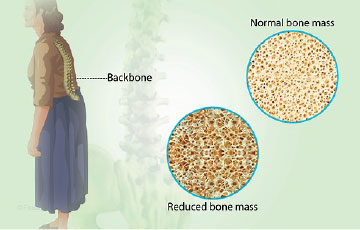
Researchers understand how osteoporosis develops even without knowing the exact cause of why it develops. Your bones are made of living, growing tissue. The inside of a healthy bone looks like a sponge; this area is called trabecular bone. An outer shell of dense bone wraps around the spongy bone; this hard shell is called cortical bone.
When osteoporosis occurs, the “holes” in the “sponge” grow larger and more numerous. This weakens the inside of the bone. Bones support the body and protect vital organs. Bones also store calcium and other minerals. When the body needs calcium, it breaks down and rebuilds bone. This process, called bone remodeling, supplies the body with needed calcium while keeping the bones strong.
Up until about age 30, you normally build more bone than you lose. After age 35, bone breakdown occurs faster than bone buildup. This causes a gradual loss of bone mass. If you have osteoporosis, you lose bone mass at a greater rate. After menopause, the rate of bone breakdown occurs even more quickly.
Who Is at Risk for Developing Osteoporosis?
Several factors influence your risk of developing osteoporosis. The most significant factors are age and gender. However, lifestyle, family history, and certain medical conditions or medications also play important roles.
Age and Gender
Everyone’s risk of osteoporotic fractures increases with age. Women over 50 and postmenopausal women face the greatest risk, as the decline in estrogen after menopause accelerates bone loss. In fact, women lose bone rapidly during the first 10 years after menopause. Men are also affected. Men over 50 are more likely to suffer an osteoporosis-related fracture than to develop prostate cancer. Each year, about 80,000 men experience hip fractures, and men are more likely than women to die within the first year following such an injury.
Ethnicity
Osteoporosis risk also varies by ethnicity. Caucasian and Asian women are at the highest risk, but African-American and Hispanic women remain vulnerable as well. Alarmingly, African-American women are more likely than white women to die after a hip fracture.
Bone Structure and Body Weight
Individuals who are petite or thin have a higher risk of osteoporosis because they have less bone mass to begin with. People with larger frames and higher body weight typically have more bone reserve.
Family History
A family history of osteoporosis or fractures is another strong risk factor. If your parents or grandparents experienced a hip fracture after a minor fall, your own risk may be increased.
Medical Conditions
Certain health conditions, especially those involving hormone imbalance, are linked to higher osteoporosis risk. These include:
- Overactive thyroid, parathyroid, or adrenal glands
- History of bariatric (weight-loss) surgery or organ transplant
- Hormone treatments for breast or prostate cancer
- Missed or irregular menstrual cycles
- Celiac disease or inflammatory bowel disease
- Blood disorders such as multiple myeloma
Medications
Some medications have side effects that can weaken bones, including:
- Long-term corticosteroid (steroid) use
- Certain breast cancer treatments
- Some anti-seizure medications
If you are taking any of these, discuss with your healthcare provider or pharmacist how to reduce their impact on bone health.
Modifiable Risk Factors
Not all risk factors are beyond your control. Lifestyle choices can make a significant difference in lowering osteoporosis risk:
- Nutrition: Low intake of calcium or vitamin D increases risk. Eating disorders such as anorexia or bulimia are also associated with bone loss.
- Physical activity: Sedentary lifestyles are linked with higher risk. Regular weight-bearing exercise helps strengthen bones.
- Tobacco use: Smoking is directly linked to weaker bones and higher fracture rates.
- Alcohol consumption: Two or more drinks per day increases osteoporosis risk.
Cancer and Osteoporosis
Certain types of cancer and their treatments can significantly increase the risk of developing osteoporosis. While cancer itself may affect bone health, most of the bone loss is linked to treatments such as hormone therapy, chemotherapy, and long-term use of corticosteroids. These treatments can interfere with the body’s ability to maintain healthy bone density, leading to an increased risk of fractures.
How Cancer Treatments Affect Bone Health
Several common cancer treatments contribute to bone loss:
- Hormone therapy: Treatments used for breast or prostate cancer that lower estrogen or testosterone can reduce bone density over time.
- Chemotherapy: Certain chemotherapy drugs may cause early menopause or reduce hormone production, which can accelerate bone loss in both women and men.
- Radiation therapy: Radiation directed at or near bones can weaken the bone structure, especially in the spine or pelvis.
- Steroids: Long-term use of corticosteroids (like prednisone) to reduce inflammation or support chemotherapy can interfere with bone rebuilding processes.
Which Cancer Patients Are at Risk?
People with the following cancer histories are at greater risk of developing osteoporosis:
- Breast cancer patients receiving aromatase inhibitors or who experienced early menopause due to treatment.
- Prostate cancer patients undergoing androgen deprivation therapy (ADT).
- Patients with blood cancers such as multiple myeloma.
- Individuals treated with high-dose steroids or radiation near major bones.
- Those with low body weight, poor nutrition, or reduced physical activity during treatment.
In particular, those with bone and breast cancer are at increased risk. When bone loss occurs due to cancer therapy, it can be more than seven times that of traditional aging. Furthermore, cancer treatment can exacerbate osteoporosis if this condition is already affecting patient bones.
Management of Osteoporosis with Cancer
Having either an increased risk for osteoporosis or osteoporosis outright can affect how your cancer is managed. Your oncologist (a doctor who specializes in treating cancer) will want to assess the chances that your bones will weaken and potentially develop fractures.
If you have a cancer diagnosis and at least one other risk factor, your doctor will likely ask you to take a bone mineral density test. For cases where your oncologist has prescribed anti-cancer medication known to cause bone loss, this test should be repeated at least every one year, if not sooner. You may be given bone-modifying medication to help lower the risk of fractures if you have osteoporosis or are at a high risk of developing it.
Reducing Bone Loss During Cancer Treatment
There are several ways to protect your bones if you’re undergoing or have completed cancer treatment:
- Ensure proper calcium and vitamin D intake: Aim for 1,200–1,300 mg of calcium daily and maintain healthy vitamin D levels to support calcium absorption.
- Stay active: Engage in low-impact, weight-bearing exercises like walking, gentle strength training, or yoga to help maintain bone mass.
- Avoid smoking and limit alcohol: Both are linked to lower bone density and higher fracture risk.
Echolight and Cancer Patients: The Non-Ionizing Advantage
Echolight (REMS Technology) is essential because it can help detect bone loss early, before it becomes a significant problem. Bone density measurements using Echolight can provide accurate and reliable results that can guide treatment decisions. For example, if bone loss is detected, the patient’s doctor may recommend lifestyle changes.
Echolight can also be used to monitor bone density over time. Regular bone density measurements help track changes and guide treatment decisions. This is particularly important for cancer patients, who may undergo multiple rounds of treatment over the course of several years. In addition to bone density measurements, Echolight can provide information on bone structure. This helps identify fractures and other bone abnormalities. Overall, Echolight plays an important role by providing accurate and timely bone density measurements, helping patients take proactive steps to improve their overall health.
When to Seek Medical Advice
If you have undergone cancer treatment—especially those affecting hormones or involving steroids—talk to your healthcare provider about your osteoporosis risk. They may recommend medications such as bisphosphonates or denosumab to help preserve bone density. Early prevention and monitoring are key to reducing your risk of fractures and maintaining long-term bone health.
For more in-depth information on managing bone health during cancer treatment, consult the guidelines from the American Society of Clinical Oncology (ASCO) or the Canadian Cancer Society.
Symptoms and Complications
There typically are no symptoms in the early stages of bone loss. The first warning sign of Osteoporosis is frequently a fracture. However, once your bones have been weakened, you might have signs and symptoms that include:
- Back pain, caused by a fractured or collapsed vertebra.
- Loss of height over time.
- A stooped posture.
- A bone that breaks much more easily than expected.
Because the first warning sign is often a fracture, the disease is called “the silent thief”. It steals bone mass without giving any indication of doing so, until a break occurs.
Complications of Osteoporosis
Bone fractures, particularly in the spine or hip, are the most serious complications of osteoporosis. Hip fractures often are caused by a fall and can result in disability and even an increased risk of death within the first year after the injury. In some cases, spinal fractures can occur even if you haven’t fallen. The bones that make up your spine (vertebrae) can weaken to the point of collapsing. This can result in back pain, lost height, and a hunched forward posture.
Prevention and Treatment
How Can I Keep My Bones Strong?
Fortunately, osteoporosis can be prevented. This requires an early diagnosis before fractures occur, accurate assessment of bone mineral density, and early treatment. The “whole-person approach” usually results in the most successful outcomes. The backbone of a complete Bone Health Program requires:
- A lifestyle balance that includes appropriate nutrition and a strong understanding of the need for a healthy and balanced diet.
- An active lifestyle including regular exercises directed toward maintaining bone health.
- Appropriate bone health monitoring and medical treatment when necessary.
How can you prevent osteoporosis?
Your diet and lifestyle are two important risk factors you can control to prevent osteoporosis. Replacing lost estrogen with hormone therapy also provides a strong defense against the disease in postmenopausal women.
Diet and Bone Density
To maintain strong, healthy bones, you need a diet rich in calcium throughout your life. One cup of skim or 1 percent fat milk contains 300 milligrams of calcium.
Besides dairy products, other good sources of calcium are salmon with bones, sardines, kale, broccoli, calcium-fortified juices and breads, dried figs, and calcium supplements. It is best to try to get the calcium from food and drink.
For those who need supplements, remember that the body can only absorb 500 mg of calcium at a time. You should take your calcium supplements in divided doses, since anything more than 500 mg will not be absorbed. For specific dietary guidance, consult an authoritative source like Health Canada or a registered dietitian.
Monitoring and Screening
If you have risk factors and are concerned about osteoporosis, you should ask your healthcare provider about being screened. Early diagnosis before fractures occur, and accurate assessment of bone mineral density are key. Treatments can also slow the rate of bone loss if you do have osteoporosis.
What can you do if you are living with osteoporosis?
If you have osteoporosis, you should continue with the lifestyle measures mentioned earlier (eating well, getting enough exercise, avoiding excessive caffeine and alcohol consumption, and not smoking). Make sure that you follow the suggestions of your healthcare provider. You should do all that you can to prevent falls inside and outside of your home. You might want to start with a medical evaluation, which could lead to your healthcare provider providing assistive devices.
Prevent Falls Inside Your Home
- Keep your floors free of clutter, including throw rugs and loose wires and cords.
- Use only non-skid items if you have mats, carpets, or area rugs.
- Make sure your lighting is bright enough so that you can see well.
- Do not use cleaners that leave your floors slippery.
- Clean up any spills that happen immediately.
- Use grab bars in the bathroom and railings on stairways.
Prevent Falls Outside Your Home
- Make sure lighting is adequate in all areas outside your home.
- Use a backpack or other type of bag that leaves your hands free.
- Keep areas outside in good repair and free of clutter.
- Wear sensible shoes with non-slip bottoms.
This is in no way a complete list of things that you can do to help prevent falls, but this is a starting point. Also remember to take your time. You might be less careful if you are in a hurry.
When should you call the doctor about osteoporosis?
If you have risk factors and are concerned about osteoporosis, ask your healthcare provider about being screened, even if you are not as old as 65 (for women) or 70 (for men). Osteoporosis can be serious. Fractures can alter or threaten your life. A significant number of people have osteoporosis and have hip fractures die within one year of the fracture.
Always call your healthcare provider if you fall, if you are worried about bone breaks, or if you have back pain that is severe that comes on suddenly. Remember that you are able to lead an active and fulfilling life even if you do have osteoporosis. You and your healthcare provider can work together to make this happen.
When should osteoporosis be treated with medication?
Women whose bone density test shows T-scores of -2.5 or lower, such as -3.3 or -3.8, should begin therapy to reduce their risk of fracture. Many women need treatment if they have osteopenia, which is bone weakness that is not as severe as osteoporosis.
Your doctor might use the World Health Organization fracture risk assessment tool, or FRAX, to see if you qualify for treatment based on your risk factors and bone density results. People who have had a typical osteoporosis fracture, such as that of the wrist, spine or hip, should also be treated (sometimes even if the bone density results are normal).
What medications are used to treat osteoporosis?
There are several classes of medications used to treat osteoporosis. Your healthcare provider will work with you to find the best fit. It’s not really possible to say there is one best medication to treat osteoporosis. The ‘best’ treatment is the one that is best for you.
For detailed medical guidelines on treatment options, you should consult the FRAX assessment tool and specific clinical resources.
Medication Classes for Osteoporosis
Hormone and Hormone-Related Therapy
This class includes estrogen, testosterone, and the selective estrogen receptor modulator raloxifene (Evista®). Estrogen therapy is likely to be used in women who need to treat menopause symptoms and in younger women due to the potential for blood clots, certain cancers, and heart disease. Testosterone might be prescribed to increase your bone density if you are a man with low levels of this hormone.
Raloxifene acts like estrogen with the bones. The drug is available in tablet form and is taken every day. In addition to treating osteoporosis, raloxifene might be used to reduce the risk of breast cancer in some women. For osteoporosis, raloxifene is generally used for five years.
Calcitonin-salmon (Fortical® and Miacalcin®) is a synthetic hormone. It reduces the chance of spine fractures, but not necessarily hip fractures or other types of breaks. It can be injected or inhaled through the nose. Side effects for the inhaled form include runny nose or nosebleed and headaches. Side effects for the injected form include rashes and flushing. It is not recommended as a first choice due to possible more serious side effects, including a weak link to cancer.
Bisphosphonates
Bisphosphonate osteoporosis treatments are considered antiresorptive drugs. They stop the body from re-absorbing bone tissue. There are several formulations with various dosing schemes (monthly, daily, weekly, and even yearly) and different brands:
- Alendronate: Fosamax®, Fosamax Plus D®, Binosto®.
- Ibandronate: Boniva®.
- Risedronate: Actonel®, Atelvia®.
- Zoledronic acid: Reclast®.
You may be able to stop taking bisphosphonates after three to five years and still get benefits. These drugs are also available as generic drugs. Of these products, Boniva and Atelvia are recommended only for women, while the others can be used by both women and men.
Possible side effects include flu-like symptoms (fever, headache), heartburn, and impaired kidney function. There are potentially serious side effects, such as the rare occurrence of jaw bone damage (osteonecrosis of the jaw) or atypical femur fractures (low trauma fractures of the thigh). The risk of these rare events increases with prolonged use of the medication (>5 years).
Biologics
Denosumab (Prolia®) is available as an injection given every six months to women and men. It is often used when other treatments have failed. Denosumab can be used even in some cases of reduced kidney function. Its long-term effects are not yet known, but there are potentially serious side effects. These include possible problems with bones in the thigh or jaw and serious infection.
Anabolic Agents
These products build bone in people who have osteoporosis. There are three of these products currently approved:
- Romososumab-aqqg (Evenity®) has been approved for postmenopausal women who are at a high risk of fracture. The product both enables new bone formation and decreases the breakdown of bone. You will get two injections, one right after the other, once per month. The time limit is one year of these injections.
- Teriparatide (Forteo®) and Abaloparatide (Tymlos®) are injectable drugs given daily for 2 years. They are parathyroid hormones, or products similar in many ways to the hormones.
Osteoporosis And Pregnancy
Even though pregnancy induces certain health conditions, most of these health issues disappear after the delivery. However, sometimes, certain health conditions that induced in the course of pregnancy can be recognized only after the delivery. Pregnancy-induced osteoporosis is one among them.
What Is Pregnancy-Associated Osteoporosis?
Pregnancy-related osteoporosis is an unusual condition that usually shows up (mostly) during the first pregnancy. The bones of the woman who experiences osteoporosis break easily during pregnancy or within a couple of weeks after delivery. The breaks usually happen in the spine, and sometimes in the hip. In spite of the fact that it can be painful and incapacitating for a period of time, the bones normally recover the break quickly. Most women recover fully without affecting their day-to-day life. Pregnancy-associated osteoporosis is generally transitory, and as a rule, does not reoccur in the following pregnancies.
When Does Pregnancy-Associated Osteoporosis Affect an Expecting Mother?
Pregnancy-associated osteoporosis is mostly figured out during the postpartum period (56%) or during the third trimester (41%). It usually occurs during the first pregnancy. Because the condition is temporary, once it goes away it does not happen again. The loss in bone density due to pregnancy and breastfeeding is temporary, and the full bone density can usually be recovered within 6 months.
What Causes Pregnancy-Induced Osteoporosis?
In pregnancy, there is a noticeable passage of calcium from the mother to the baby. The baby needs about 30 g of calcium, 80% only in the last quarter. This causes a consequent lowering of the bone density of the pelvis and spine. This leads to a high-risk fracture also due to high weight gain and estrogen. Also, some women are more prone to low bone density than others. This may happen when:
- Closely spaced pregnancies: Women who get pregnant before three months after the previous delivery may have a greater risk for osteoporosis than those who wait longer between babies.
- Pre-existing condition: It is possible that some women already have low bone density before getting pregnant, either due to medications or due to the lifestyle.
- Genetic factor: Researchers are not denying the role of the genetic factors when it comes to pregnancy-related osteoporosis.
- Increased bone metabolism: The bone metabolism increases during the third trimester, as the skeletal system of the baby is developing. This brings about extra withdrawal from the calcium bank, adding stress to the mother’s skeleton.
- Inadequate level of calcium and vitamin D: Inadequate calcium and vitamin D levels may result in the excessive ‘withdrawals’ from the calcium bank, weakening the bones in the course of pregnancy.
- Heparin shots: Heparin injections taken prior to or in the course of pregnancy to treat anti-phospholipid syndrome, in some instances, result in pregnancy-associated osteoporosis.
What Are the Symptoms of Pregnancy-Associated Osteoporosis?
There are no particular symptoms that indicate the issue of osteoporosis. However, the expecting mother experiencing osteoporosis often develops:
- Severe back pain
- Loss of height
- Vertebral fracture
How Is Pregnancy-Induced Osteoporosis Diagnosed?
Pregnancy-associated osteoporosis usually remains unidentified until the delivery. This is because there is no particular sign that specifies the condition of osteoporosis. Besides, back pain, a vital sign of osteoporosis, is very common during pregnancy. Moreover, the procedures like bone scan and X-rays, which are used to diagnose the osteoporosis, are very dangerous to perform during pregnancy.
A fracture during pre-delivery, delivery, or post-delivery generally leads to a diagnosis of pregnancy-induced osteoporosis. As already mentioned, hip bones and ribs are more frequently susceptible to the fracture.
Echolight and Pregnancy: The Safe Diagnostic Method
Now, it is possible to evaluate the bone density of the vertebrae and the femur without the use of the X-rays. This is achieved through a simple radiation-free technique (Echolight system using ultrasound) that will allow the clinicians to prescribe an appropriate therapy, increasing the intake of calcium and vitamin D if necessary to prevent the disease.
Echolight is the only proved method to diagnose osteoporosis during pregnancy without any harm to the baby as it is using ultrasound. For further clinical authority, see studies on non-ionizing diagnosis published in medical journals.
Do the baby’s bones get affected due to pregnancy osteoporosis?
No, the pregnancy-induced osteoporosis has no harm effect on the bones of the baby. All the calcium deposition needs of the baby are fulfilled from the withdrawn calcium from the calcium bank of the mother.
What are the treatment plans for pregnancy-Induced osteoporosis?
- Fractures in vertebrae mostly heal on their own.
- A fracture in the spine needs prolonged rest to heal.
- Vitamin D and calcium supplements are prescribed to fix the bone density.
- Medicines to get relief from the pain and that cause no harm during breastfeeding are prescribed by the doctor.
- Hydrotherapy, a therapy done in the swimming pool under the supervision of a physiotherapist, helps to relieve pain, as you feel weightless and easy to move around.
- Transcutaneous Electrical Nerve Stimulation (TENS machine) is used, in which electrical impulses are utilized to block the pain signals.
Can the mother feed her baby if she had pregnancy-induced osteoporosis?
Some doctors strongly disagree with feeding your baby if you have osteoporosis, as the breastfeeding will draw more calcium from the skeleton and can delay the recovery of your bone strength. However, breastfeeding is also a very personal, individual choice. If you insist you need to feed the baby, discuss the matter with the doctor. The doctor will try to find a solution to increasing the intake of vitamin and mineral supplement.
Oncology & Osteoporosis
Osteoporosis can be caused by bone cancer or by certain types of cancer that spread to the bones. Cancer that has not metastasized (spread beyond its original site), increased inflammation both at the cancer site and throughout the body can lead to bone loss. The bones are also a common site of metastasis, affecting the skeleton.
Some forms of cancer treatment can also weaken bones, although they can improve survival. Cancer treatments may aim to reduce estrogen or testosterone to slow cancer growth (particularly when treating breast or prostate cancer). The blocking of these protective hormones can lead to bone weakening.
Cancer Treatments That Increase Osteoporosis Risk
Cancer treatments that can increase the risk of osteoporosis include:
- Aromatase inhibitors, such as Femara (letrozole), Arimidex (anastrozole), Aromasin (exemestane)
- Gonadotropin-releasing hormone agonists, such as Zoladex (goserelin) and Lupron (leuprolide)
- Surgical removal of the ovaries or testes
- Androgen deprivation therapy, such as Casodex (bicalutamide), Eulexin (flutamide), Nilandron (nilutamide)
- Some people with brain tumours need to take antiseizure medicines (anticonvulsants) to prevent seizures.
- Steroids, such as prednisone and cortisone
- Some chemotherapy medications
- Medications that suppress the immune system, such as methotrexate
Types of Cancer That May Lead to Bone Loss
Types of cancer that may lead to bone loss include the following:
- Bone cancer
- Breast cancer
- Prostate cancer
- Lung cancer
- Multiple myeloma (cancer of the plasma cells)
In particular, those with bone and breast cancer are at increased risk.
When bone loss occurs due to cancer therapy, it can be more than seven times that of traditional aging. It is typically more rapid and severe. Furthermore, cancer treatment can exacerbate osteoporosis if this condition is already affecting patient bones.
Management of Osteoporosis With Cancer
Having either an increased risk for osteoporosis or osteoporosis outright can affect how your cancer is managed. Your oncologist (a doctor who specializes in treating cancer) will want to assess the chances that your bones will weaken and potentially develop fractures. Some non-cancer-related risk factors they will weigh include:
- Your age
- If you are postmenopausal
- Whether you’re a cigarette smoker
- Whether you consume alcohol
- If you’ve had other fractures as an adult
- Whether your body is producing sufficient sex hormones
- If you are thin
- If your parents had a history of hip fractures
If you have a cancer diagnosis and have at least one other risk factor for osteoporosis, your oncologist will likely ask you to take a bone mineral density test. For cases in which your oncologist has prescribed an anti-cancer medication known to cause bone loss, this test should be repeated at least every one year, if not sooner. You may be given bone-modifying medication to help lower the risk of fractures if you have osteoporosis or are at a high risk of developing it. These include bisphosphonates. As a rule, hormone replacement therapies known to be protective of bone will be avoided if you have hormone-responsive cancer because it would stimulate cancer growth.
Prevention During Cancer Treatment
Having a diagnosis of cancer does not necessarily mean that you are destined to also develop osteoporosis. To help keep osteoporosis from occurring in conjunction with any cancer diagnosis, you will likely be advised to do the following:
- Ramp up the amount of calcium and Vitamin D that you consume. It will likely be recommended that you consume at least 1,000–1,200 milligrams per day of calcium and 800–1,000 international units (IU) per day of Vitamin D.
- Quit smoking because it can affect bone quality and can otherwise heighten fracture risk.
- Give up drinking alcohol, which can affect your balance and otherwise lead to falls.
- Exercise to improve balance, strength, and flexibility and help reduce the chance of falls.
Echolight and Cancer Patients: Safe, Accurate Monitoring
Echolight (REMS Technology) can help detect bone loss early, before it becomes a significant problem. Bone density measurements using Echolight can provide accurate and reliable results that can guide treatment decisions. For example, if bone loss is detected, the patient’s doctor may recommend lifestyle changes.
Echolight can also be used to monitor bone density over time. Regular bone density measurements can help track changes and guide treatment decisions. This is particularly important for cancer patients, who may undergo multiple rounds of treatment over the course of several years. In addition to bone density measurements, Echolight can also provide information on bone structure. This information can be used to identify fractures and other bone abnormalities. Overall, Echolight plays an important role in the care of cancer patients by providing accurate and timely bone density measurements, helping patients take proactive steps to improve their overall health.
For more detailed information on managing cancer-related bone health, consult resources from authoritative oncology organizations like the Canadian Cancer Society or ASCO.